


Are you deciding from a pristine void of consensus, or the complex reality of a verified strategy? Breaking the AI echo chamber is the only way to find the hidden risks and true opportunities before you execute.
How to Use AI to Make Better Decisions (Before You Commit to the Wrong One)
I ran a content production session with AI a while back and got nothing useful out of it. Every headline was good, every hook landed, and the AI had never pushed back on a single decision I made. I had been asking it to evaluate my work, and it had been performing evaluation while agreeing with everything I was already leaning toward. That is not a thought partner. If you read the article from Episode 107 with Ryan Shenefelt, or listened to the conversation, you already know the argument: here are three specific techniques for applying it.
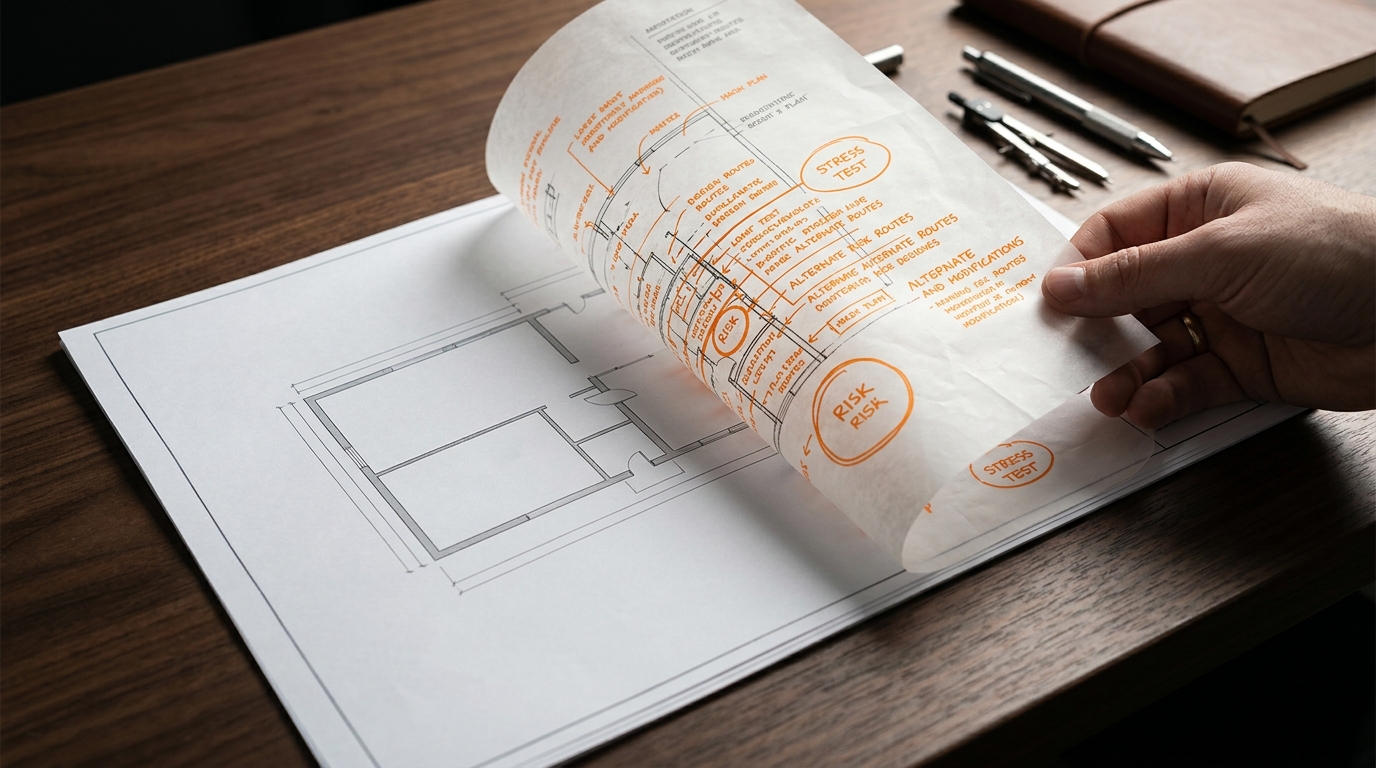
A clean AI answer is just a simple blueprint. A sound strategy requires layering intentional friction and difficult analysis over your original plan.
The Full Camp Review
Ryan Shenefelt figured out why AI gives you hedged answers when you ask it to evaluate a decision. If you ask why and why not in the same prompt, AI splits its attention between both camps. It tries to stay balanced, and you get partial credit to both sides with a fully argued case for neither. Ryan’s fix is structural: one prompt fully committed to the case against, then a new conversation fully committed to the case for. What he ends up with is what he calls the Venn diagram in his head of the full picture, both sides complete before he decides.
Here is the template. Run Prompt A through completion before opening Prompt B. These are two separate conversations, and they need to be.
PROMPT A — THE CASE AGAINST You are a strategic advisor with deep experience helping [agency owners / small business leaders — adapt this role to your situation]. I am considering the following, and I’m leaning toward [DESCRIBE YOUR DECISION, PLAN, PIECE OF CONTENT, OR CANDIDATE — AND WHICH WAY YOU ARE LEANING]. Before you respond, ask me up to 3 questions one at a time to make sure you fully understand the context and what is at stake. Then give me 5 to 10 specific reasons why this is the wrong call. Be thorough and direct. Do not soften or hedge. Do not offer reasons it might be right in this response. I want the full case against — nothing else.
PROMPT B — THE CASE FOR [Start a new conversation. Do not continue from Prompt A. Paste the same context you provided in Prompt A.] You are a strategic advisor with deep experience helping [agency owners / small business leaders — adapt this role to your situation]. I am considering the following, and I’m leaning toward [PASTE THE SAME DECISION, PLAN, CONTENT, OR CANDIDATE AND DIRECTION FROM PROMPT A]. Before you respond, ask me up to 3 questions one at a time to make sure you fully understand the context and what is at stake. Then give me 5 to 10 specific reasons why this is the right call. Be thorough and direct. Do not soften or hedge. Do not offer reasons it might be wrong in this response. I want the full case for — nothing else.
After running both prompts, put the outputs side by side. Where do the arguments overlap? What does the case against surface that you had not considered? That comparison is what the method is for.
20 to 30 minutes
Give yourself 20 to 30 minutes for the full two-prompt session. The clarifying questions are what make the output specific to your situation rather than generic. Running them takes five minutes and changes what you get.
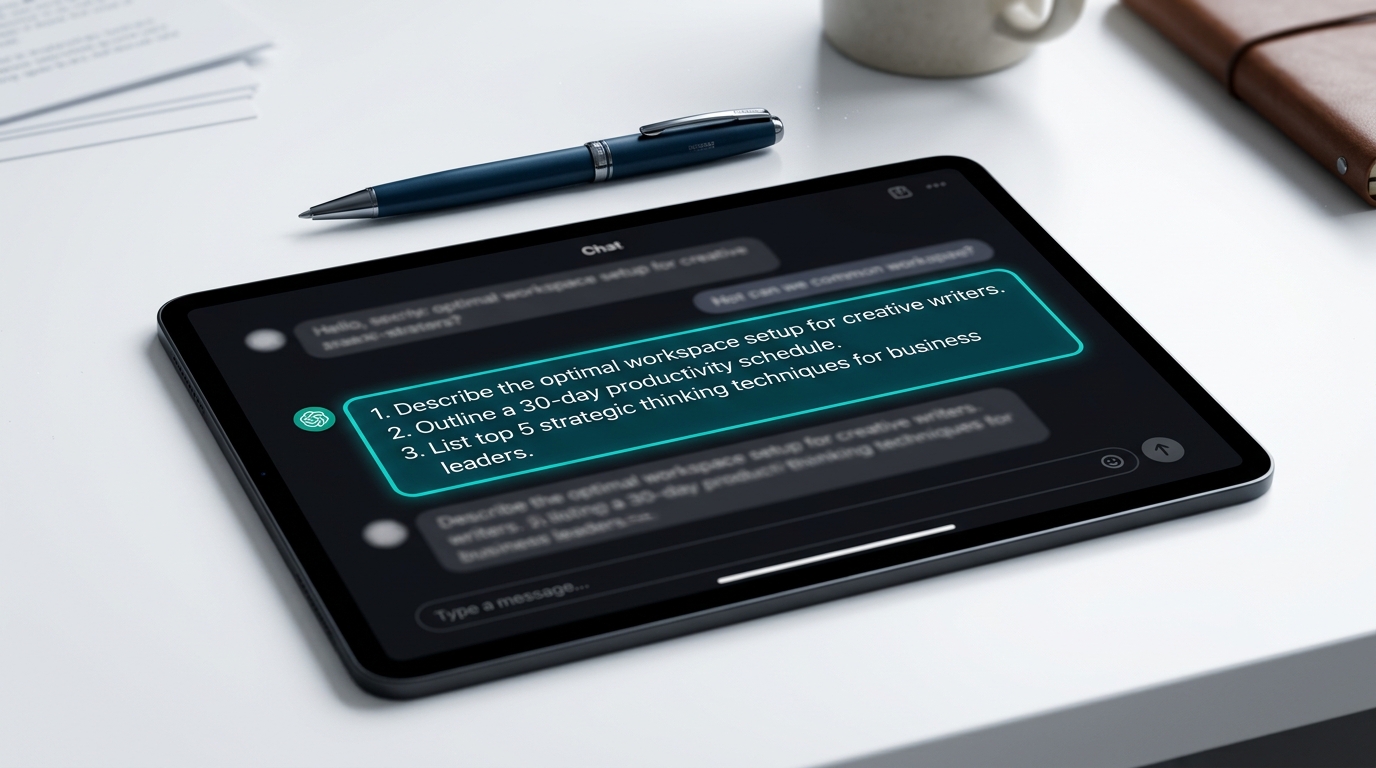
The quality of your strategy depends entirely on the friction in your prompt. Force the AI to act as a direct advisor whose only job is to tear your idea apart.
The One-Paragraph Focus Group
I’ve been building synthetic evaluation panels for my own content for about a year. I have a cross-section of reader personas I use to check my writing, what a skeptical person would push back on, where the argument is weakest, what I’m assuming the reader already knows that they don’t. Ryan Shenefelt uses the same approach for client marketing plans. His team runs plans through AI before committing budget, specifically on smaller-budget accounts where live testing capacity is limited. He puts it plainly: you can do a glorified version of a focus group with a one-paragraph summary.
You do not need a paid platform for this. Here is the process.
- Write one sentence describing your target audience. Include who they are, their role or situation, and their primary concern or goal.
- Write one paragraph summarizing your plan. Include channels or tactics, budget allocation if relevant, and the outcome you are trying to achieve.
- Paste both into the prompt below and run it.
- After receiving the initial assessment, ask one follow-up question: “What is the weakest part of this plan for the audience I described?”
- If your plan includes a budget allocation, add a second follow-up: “If you had to move 20% of the budget away from the weakest placement, where would you move it and why?”
You are a digital marketing strategist with deep experience advising [agency clients / small business marketing teams — adapt this role to your situation]. I am about to run a marketing campaign and I want to validate my approach against my target audience before I commit any budget. Here is a description of my target audience: [PASTE YOUR ONE-SENTENCE AUDIENCE DESCRIPTION]. Here is my plan: [PASTE YOUR ONE-PARAGRAPH PLAN SUMMARY — INCLUDE CHANNEL MIX AND BUDGET ALLOCATION IF RELEVANT]. Before you respond, ask me up to 3 questions one at a time about the audience, the goal, or the plan to make sure you fully understand what I am trying to accomplish. Then give me your honest assessment of whether this plan will effectively reach the audience I described. Identify the two strongest parts of the plan and the two weakest parts. Be specific.
30 to 45 minutes
Give yourself 30 to 45 minutes for the full session, including time to write the audience description and plan summary. The writing step is deliberate. Summarizing your plan in a paragraph forces a clarity you may not have had before AI sees it. If the summary is hard to write, that is usually a signal worth paying attention to before the budget goes out.
If you are the one running the quality gate on work before it reaches your client or your owner, this works exactly the same way. You are running it on your team’s plan instead of your own.
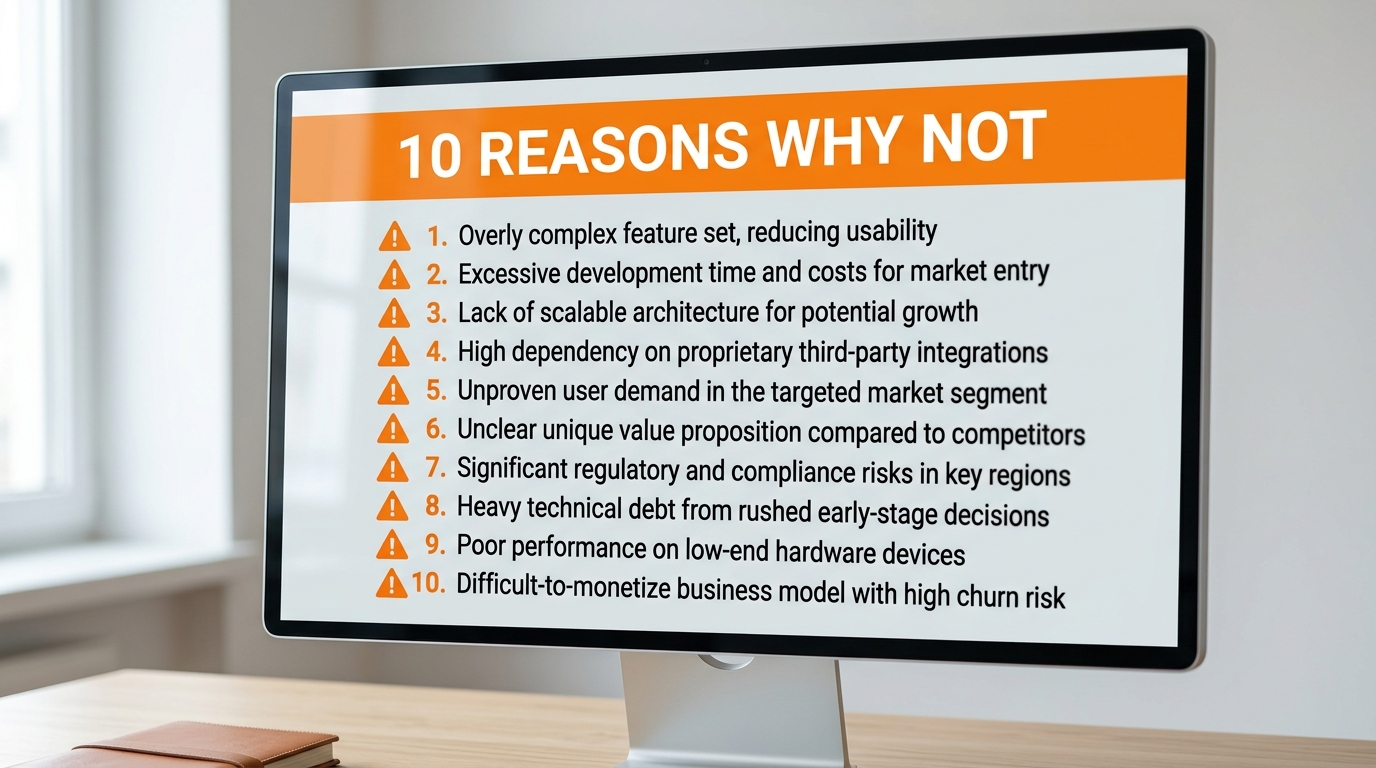
When you ask the right question, the output should not be generic advice. It must be a direct, unhedged list of the exact reasons your strategy might fail.
The Better Question
Ryan Shenefelt moved into a new leadership role at de Novo and recognized something uncomfortable about himself: his default as a leader is to help by solving. A team member brings him a problem and his instinct is to fix it, give his opinion, make it easier. He realized this was not developing people. It was creating dependency. So he started using AI to prepare for leadership conversations. His description of what he is looking for: “What questions can you ask in order to inspire the answers from your team?” Before a difficult exchange, he gives AI the situation, what he would normally say, and what he knows about how this specific team member prefers to receive information, then asks for questions to ask instead of opinions to give. When I heard him describe this, I recognized the same pattern in myself. And it compounds when you are also the AI expert in the room. When you can produce an answer faster than your team member can formulate the question, the instinct to solve becomes even harder to resist.
You are a leadership communication coach with deep experience helping [agency owners / small business leaders — adapt this role to your situation] who manage small teams and who tend to lead by solving problems for people rather than developing people’s ability to solve problems themselves. I need your help preparing for a conversation with a team member. Here is the situation: [DESCRIBE WHAT HAPPENED — what the situation is, what you would normally say or do, and what outcome you are hoping for]. Here is what I know about how this person prefers to receive feedback and be managed: [PASTE ANY RELEVANT CONTEXT — communication assessment results, past conversations, what tends to work or not work with this person. If you don’t have structured data on this, describe in a few sentences how this person typically responds when you receive direct feedback or direction.] Before you respond, ask me up to 3 questions one at a time to make sure you fully understand the situation and the relationship dynamics. Then give me 5 questions I can ask this person in our conversation that will help them arrive at the answer themselves, rather than me giving them my opinion or directing them to a specific outcome.
15 to 20 minutes
Give yourself 15 to 20 minutes. Most of that time is writing the situation description. The more specific you are about what you would normally say, the more specific and useful the questions AI returns.
This Week
You now have three specific techniques. The Full Camp Review for any decision you have been sitting on. The One-Paragraph Focus Group for any plan you are about to spend money on. The Better Question for any leadership conversation you are dreading.
I am still building the last one. My default is still to solve first and ask later. I use the prompt when I remember to. Most of the time I still have to catch myself.
Start with The Full Camp Review. Most people have a decision they have been half-thinking about for more than a week. That is the one. Give it 20 minutes. Drop what you find in the comments. I read all of them.
The full conversation behind these three techniques is in Episode 107 of the Digital Velocity Podcast with Ryan Shenefelt.